this post was submitted on 05 Dec 2025
9 points (90.9% liked)
Technology
77084 readers
1163 users here now
This is a most excellent place for technology news and articles.
Our Rules
- Follow the lemmy.world rules.
- Only tech related news or articles.
- Be excellent to each other!
- Mod approved content bots can post up to 10 articles per day.
- Threads asking for personal tech support may be deleted.
- Politics threads may be removed.
- No memes allowed as posts, OK to post as comments.
- Only approved bots from the list below, this includes using AI responses and summaries. To ask if your bot can be added please contact a mod.
- Check for duplicates before posting, duplicates may be removed
- Accounts 7 days and younger will have their posts automatically removed.
Approved Bots
founded 2 years ago
MODERATORS

you are viewing a single comment's thread
view the rest of the comments
view the rest of the comments
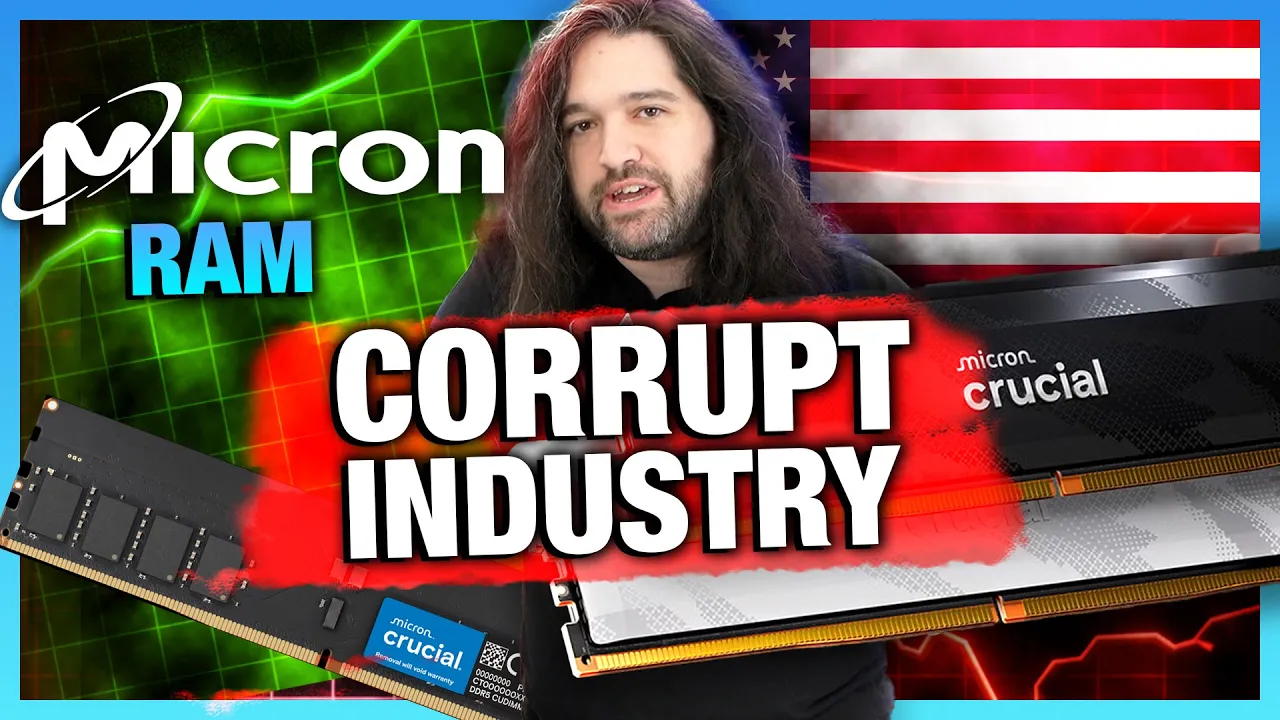
The creator in that video seems to think the Chips Act subsidies were to benefit consumers by having affordable memory produced domestically. That wasn't the goal. The goal was to derive drive GDP by having another source of domestic production, and drive job growth/tax revenue from workers working at the domestic facility. Lastly, it was to have strategic domestic production decoupled from other nations so we, as a nation, could not be held hostage by another nation (like we do to so many other nations) for crucial (pun very much intended) resources we need.
Nothing about that is about making RAM cheaper for retail consumers.
I think that's the surface level, rational reading, but I think the realistic reading is it was simply a kickback to fortune 500 companies that got these politicians elected. Haven't we already funded at least one factory that ended up being smoke and mirrors?
If there were no legitimate geopolitical reasons, then the "simply a kickback" would be much more plausible. Also, if it was a single source company, then "simply a kickback" would look true. Additionally, if was perhaps just domestic companies "simply a kickback" would certainly be even more likely. Lastly, the Chips act wasn't just about production domestically. It also blocked sales/exports of completed high end chips and chip making equipment to China. If the Chips act was "simple a kickback" you wouldn't do all that other stuff, and you certainly wouldn't allow foreign winners (like Taiwan's TSMC).
Was their rewards because of industry lobbying? Certainly. However, unless you're in a purely communist system of government where all the companies are owned by the state, you're always going to have private companies benefiting from government spending, tax breaks, and subsidies. As to this just applying to fortune 500 companies, there isn't really a "mom and pop" semiconductor industry making handfuls of chips at a time except outside of engineering sample that are used in R&D for fortune 500 companies.