Selfhosted
A place to share alternatives to popular online services that can be self-hosted without giving up privacy or locking you into a service you don't control.
Rules:
-
Be civil: we're here to support and learn from one another. Insults won't be tolerated. Flame wars are frowned upon.
-
No spam posting.
-
Posts have to be centered around self-hosting. There are other communities for discussing hardware or home computing. If it's not obvious why your post topic revolves around selfhosting, please include details to make it clear.
-
Don't duplicate the full text of your blog or github here. Just post the link for folks to click.
-
Submission headline should match the article title (don’t cherry-pick information from the title to fit your agenda).
-
No trolling.
-
No low-effort posts. This is subjective and will largely be determined by the community member reports.
Resources:
- selfh.st Newsletter and index of selfhosted software and apps
- awesome-selfhosted software
- awesome-sysadmin resources
- Self-Hosted Podcast from Jupiter Broadcasting
Any issues on the community? Report it using the report flag.
Questions? DM the mods!

I wouldn't recommend network apps to a complete beginner. They might loose their network for a while and get afraid of tinkering. My 2p
I'd recommend technitium over both pihole and adguard these days. Its an actual DNS server vs just a sinkholr, had recursive resolving out of the box, Root server mirroring at the click of a button, cluster mode etc
Pihole is great, little hardware projects are fun (touchscreen calendar in the kitchen). They also make great emulators for old systems if you want to install a gaming oriented OS like retropie or lakka and get a gamepad or two.
I personally wouldn't use it for a server, but it's a good learning environment to figure out how to run services.
The beauty of the pi is it is an SD card swap away from doing a different job. You can buy a few fast cheap 16-32gb SD cards and play around with different options and operating systems.
Or you can do what I do: get it all set up, shut it down, and forget it exists until you have some wild idea.
I'm running Home Assistant on mine at the moment. It's amazing. Really. Apart from being an great smart home solution I've found it a good solution to create dashboards for life.
I have set up our family calendar, train schedules that change routes depending on the time. Waste collection notifications. It warns me to get a raincoat and umbrella in the morning. I get news headlines for my interests...
Before that I've tried a lot. It was my first step into home labbing 2 years ago. It brought me back to my youth. Breaking the family computer and trying to fix it before anyone noticing it.
Most of the stuff I ran used Docker.
- Joplin notes
- Mealie
- Immich
- Authentic
- Wanderer
- Homarr
- pihole
- portainer
Within a year I grew out of my pi setup and bought a second hand mini Lenovo that now runs Proxmox. Minor investment, huge upgrade. Moved away from dockers also.
The pi is a fun gateway drug.
Big +1 for second hand corporate mini PCs
They’re cheaper and better in every way than the Pi
Only get the Pi if you need a specific HAT or GPIO. And even then get a zero.
Only get the Pi if you need a specific HAT or GPIO. And even then get a zero.
Or if you want to run the machine via PoE.
There are machines (like the Futro s740) that can be powered by POE as well.
Why no docker?
That's a pretty big computer. It's bigger than an American pickup truck. God damn!
- Ubuntu desktop - the whole shebang including office apps
- PiHole ad-blocker
- Jellyfin video server
- Minecraft server
- Local LLMs
- On-site VPN service
- Home Assistant smarthome controller
So many things, and much more...
Sell it
I'm dead serious. They can go for a decent price which should cover the cost of a X86_64 machine
Why would I want a x86 machine if all I need runs so well on my Pi and uses like under 5 Watts?
The mini-pcs that people typically recommend use around that at idle, and are much more powerful and have more reliable storage. But if you all you need is a Pi that's fine of course.
What are the mini PCs people typically recommend?
idk about a 4b these days but the 5's are stupid priced. You can get a refurbed 6th gen intel machine with 16gb of ram and an SSD for the price of a 4Gb Pi 5. Add an ESP32 running ESPhome or Firmata and you've got everything you could do with a Pi and a lot more.
Got a link? I'd love to get me one of those
Something like the HP EliteDesk 800 G2 will do the trick, they are all over eBay
If they've already got a 4B there's no reason not to use it for one of the many low-power low-profile uses, especially when the cost of PC components is going nuts now
Whats an x86_64 equivalent of a pi these days? I'd love to find one, especially worried if pi goes the way of Arduino
Check out the Futro S740. It is more powerful than the pi, uses comparable power and still quite compact.
They can be found (in Germany at least) for 40€ with 4gb RAM and about 50€ for 8gb of ram. Ram is upgradeble, so is storage.
If you want something (much) more powerful, there is the Lenovo tiny line, for example the m710q or m720q (one cpu generation newer).
Much appreciated will check it out! 😃
I run Movary on my NAS in a docker container so that my partner has a place to add to our watch-list.
I also run a personal kbase that I built on top of Docbase and Markdown files.
And I recently started using HTTP2Shell to throw commands at a local networked device. This is useful to me personally, maybe not for others, because I've written my own automations.
I recently considered adding Home Assistant, but it doesn't look like it's gonna happen because we have lamps that don't remain in an "on" state when unplugged; any devices I might buy to add wifi to them wouldn't actually turn them on remotely as a result. Shame cause there's one that's pretty necessary at night that's between a wall and a sofa that's pushed back against it because that's just the layout of the room. I don't mind manually controlling the others, but that was the one that would have been nice to trigger from my phone. Our thermostat and robot vacuum would have been on the same system, but they already have dedicated apps anyway.
You're only limited by your imagination and curiosity (and wallet).
Pihole. Protect your network from ads.
Look into volumio to make a whole home music streaming solution. You can buy various pi Hats to get better DACs than the internal pi one.
Minecraft server!
Mine was my local Forgejo server, NAS server, DHCP -> DNS server for ad blocking on devices connected to the network, torrent server, syncthing server for mobile phone backup, and Arch Linux proxy, since I've a couple of machines that basically pull the same updates as each other.
I've retired it in favour of a mini PC, so it's back to being a RetroPie server, have loads of old games available in the spare room for when we have a party, amuses children of all ages.
They're quite capable machines. If they weren't so I/O limited, they'd be amazing. They tend to max out at 10 megabyte/second on SD card or over USB / ethernet. If you don't need a faster disk than that, they're likely to be ideal in the role.
There are some sites dedicated to suggestions, or if you download the pi image burner tool it has a bunch of OS suggestions in the menu, like Pihole, Kodi media box, home assistant, etc.
I have a few running. One was setup as NAS and dlna music server using OpenMediaVault, one is a Volumio music player, my other one is Home assistant.
If you like old 80s-90s games there is RetroPi.
Too many choices really :)
I host a web server and gemini capsule on mine. I previously hosted a Minecraft server, but moved it over to my desktop recently.
I got my Pi4 to be a media player - LibreElec or Kodi - for my old, not-smart TV. It plays my library of CDs&DVDs, frontend for OTA TV, and a variety of streaming services. Fanless, so it doesn't distract from audio, low power, so I don't mind leaving it on 24/7. You can configure it to listen to a USB IR receiver, but I control mine from phone via web. The actual media library/NAS and tvheaded run on an old desktop in another room.
My favorite thing is all the sensors you can hook up. Adafruit & Sparkfun have a wide array of sensors with breakout boards for simplicity and well documented python libraries. I started just logging temperature, humidity, then air quality, CO2 to my own database and web page, but eventually expanded to full HomeAssisstant system.
Pihole.
@tburkhol @rook Protip for Pi4B TV usage: if your TV has a USB port, you might be able to power the Pi from it. I turn the TV on and my 4B gets power from it, boots up, and starts Kodi (I'm using libreelec) automatically. When I turn the TV off, the TV hardware stays powered for like 5 mins before going into a low power mode which kills power to the Pi.
many don't deliver enough power for a Pi 4.
What's currently running on mine:
- 10 commodity SSDs through a powered USB hub forming a poor man's NAS with snapraid + mergerfs
- Podsync for converting my favorite YouTube channels to podcast feeds
- Syncthing for generic file synchronization
- K3s for whatever projects coming to my mind
- Retroarch for occasional gaming needs
- MPD with a floppy disk interface as my music station
- CUPS for printserver
10 commodity SSDs through a powered USB hub forming a poor man's NAS with snapraid + mergerfs
How did you end up with this setup? Did you just already have a bunch of SSDs from over the years? That'd be cool af if you posted a photo of it.
Pihole+unbound, navidrome for your music. Tailscale for remote connection to your music. Setup your own photo library with immich. An invidious instance
I installed mainsail os and use it as my main controller for my 3d printer, sounds complex but it just needs a usb cable and the firmware can upload itself
A Pi 4 can do quite a bit. Maybe start off with some Docker apps. Try and host PiHole for ad blocking at home?
To build on all the great suggestions here, you can install DietPi (a pared down version of Debian), and then use Docker on top of that to run almost any of the services mentioned in this thread on a single RPI host machine.
I run Adguard Home without any issue on an RPI Zero so installing only that on your 4b will leave some performance on the table.
I run nextcloud on mine.
If I were doing it again today, I would try the AIO installation
Go checkout openmanet. Get yourself a suite of portable nodes and a wide ranging ip network
what do you enjoy doing online?
my recommendation would be to start small, without having to trust yourself with your own data, at least not in the short term.
maybe try your own instance of photon, it's a frontend for lemmy.
I use mine as a low power server. Whenever I feel like tinkering with a website or something, I can just ssh into it without thinking about electricity usage. Jellyfin and such is also a good usecase
I use mine to run RetroPi, it has a bunch of old console emulators. Get a big torrent of old ROMs and you are set for retro gaming.
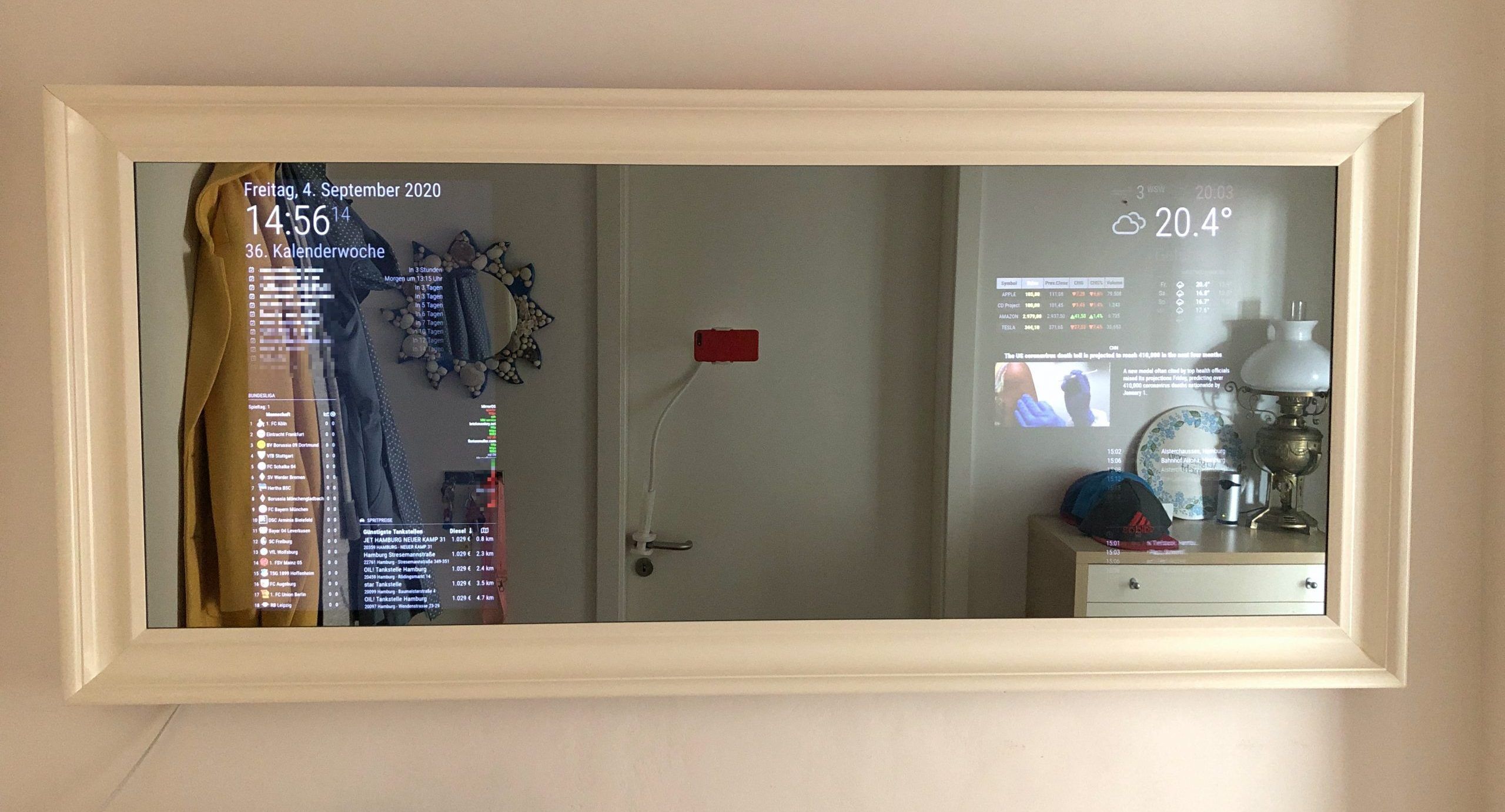
I use them from time to time. Sometimes to tinker on, or have a specific purpose. For instance one runs a display that I can shuffle through all my surveillance cams. One runs a Magic Mirror. Pretty neat little project with useful applications.
You can easily run Jellyfin and Immich (I disabled the machine learning bits though) on this. As an extra I also run Metube for easy downloads of youtube videos.
Keep swapping the OS (or have different memory cards) and play around with whatever software you come across that peaks your interest.