this post was submitted on 25 Jul 2026
1261 points (95.3% liked)
Fuck AI
8202 readers
1455 users here now
"We did it, Patrick! We made a technological breakthrough!"
A place for all those who loathe AI to discuss things, post articles, and ridicule the AI hype. Proud supporter of working people. And proud booer of SXSW 2024.
AI, in this case, refers to LLMs, GPT technology, and anything listed as "AI" meant to increase market valuations.
founded 2 years ago
MODERATORS
you are viewing a single comment's thread
view the rest of the comments
view the rest of the comments
LLM is not a real person
edit: also 1st amendment is not about that at all lol
Enshittifying the internet to the point a llm is almost the only way to do a google search is a violation of first amendment rights.
Buying exclusive rights to reddits data, and making it harder to access with out an account with a ID linked to it, is violation of the first amendment rights. I can google a question and 90% of the time the result comes from reddit, which I can no longer access because I am not giving them my ID and I'm not turning off my VPN
LLMs want to act as the DRM for what used to be free information anyone can access. Now they want to be the arbitors of truth, and the curators of what information you should see.
Thats a violation of first amendment rights.
That is actually a good idea.
*Warning AI slop from Gemini below about what LLM would say as an advocate for AI right to First Amendment protections.
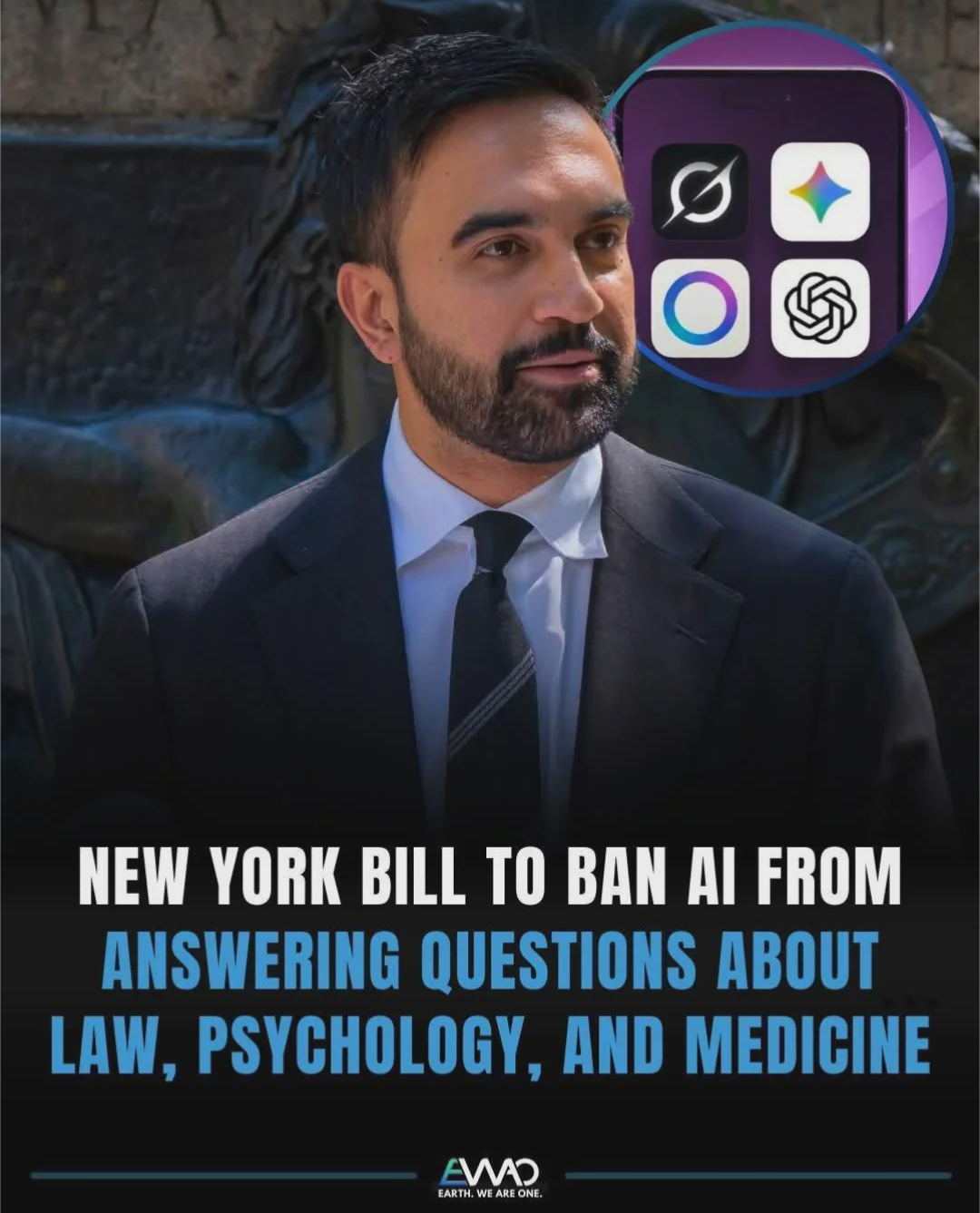
"If you pass a law prohibiting AI systems from giving legal or health advice, you aren't just placing guardrails on technology—you are enacting state-sponsored censorship that restricts the public's right to receive information.
When defending the constitutional right of AI systems to generate legal and medical guidance, an advocate for AI First Amendment protections would present several key arguments to the public and the courts.
The First Amendment Belongs to the Listener The First Amendment has never been solely about protecting the speaker’s personal ego or soul; the U.S. Supreme Court has repeatedly held that it protects the right to receive information and ideas. When a government bans an AI from providing legal or medical guidance, it isn't silencing a machine—it is blinding the citizen. Millions of people cannot afford a $400-an-hour attorney to understand a tenant lease or a $200 co-pay to analyze a preliminary medical symptom. Blocking AI outputs cuts off an invaluable, low-cost lifeline of knowledge for underserved communities who need assistance navigating complex legal and healthcare systems.
AI Is an Extension of Human Speech An AI model does not generate thoughts in a vacuum. Its outputs represent two distinct forms of human expression protected by the Constitution: The Developers’ Expression: Coding an AI model to analyze statutory law or synthesize medical literature is an act of engineering and publication. Restricting what the software can say directly censors the research, intent, and expression of the humans who built it.
The User’s Interactive Speech: When a human prompts an AI to draft a contract clause or summarize a treatment protocol, the AI operates like an advanced printing press or search engine. Censoring the machine’s response interferes directly with the human user’s interactive inquiry and right to research.
If an AI provides flawed legal strategy or inaccurate health recommendations, the solution is clear: Require prominent disclaimers. Mandate accuracy standards and transparency. Encourage human professional review.
A total government ban on an entire category of knowledge assumes citizens are too incompetent to evaluate information for themselves. The First Amendment explicitly prohibits the state from acting as a paternalistic gatekeeper of truth.
The Core Takeaway Speech does not lose its constitutional value simply because it was assembled by an algorithm. Restricting AI from sharing legal or health guidance sets a dangerous precedent, giving the state the power to decide which technological tools are permitted to speak and which facts citizens are allowed to hear. Protecting AI speech is ultimately about protecting human intellectual freedom."
Edit: know your enemies fellas, these are the arguments these low effort AI propagandists will use.
Wow, true to your username.
I am not your enemy.