politics
Welcome to the discussion of US Politics!
Rules:
- Post only links to articles. Title must fairly describe link contents. If your title differs from the site’s, it should only be to add context or be more descriptive. Do not post entire articles in the body or in the comments.
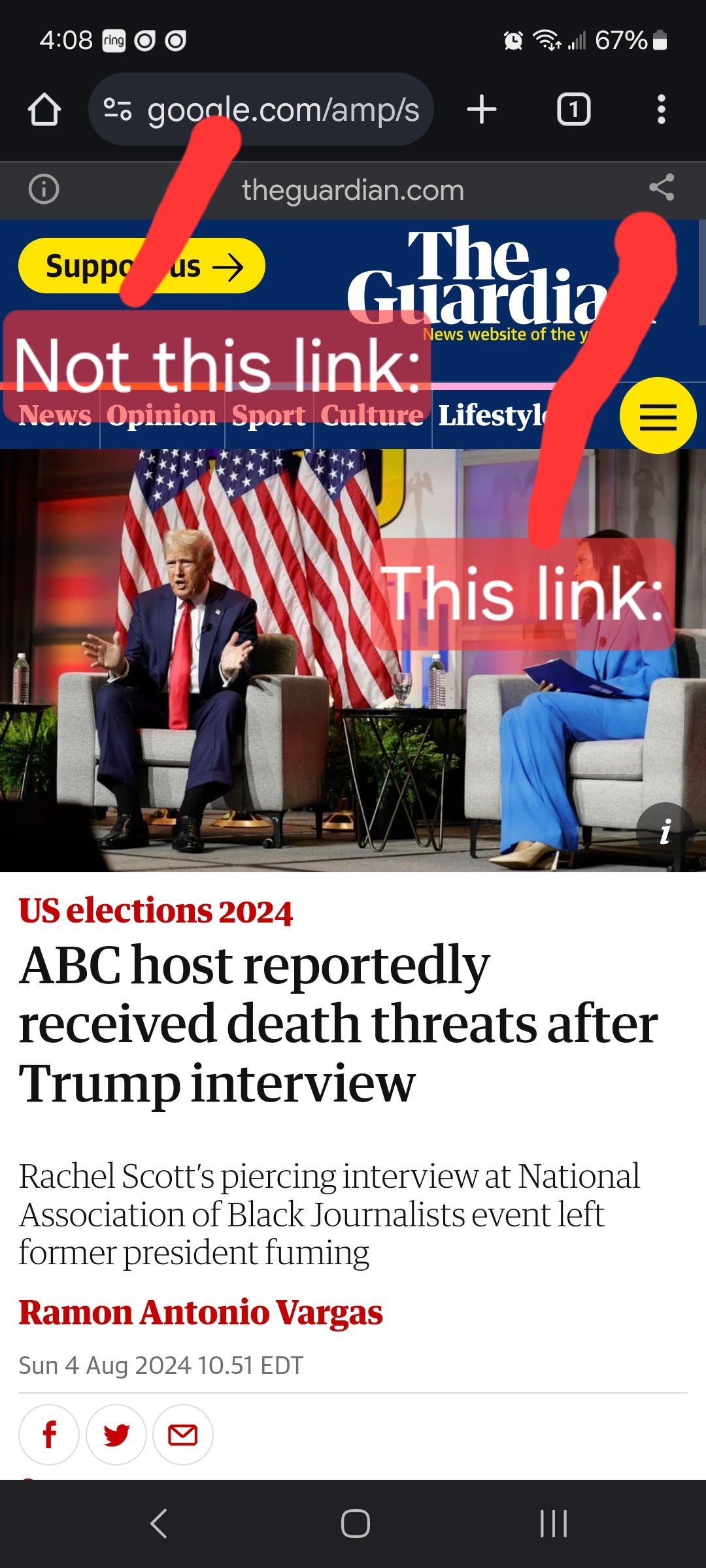
Links must be to the original source, not an aggregator like Google Amp, MSN, or Yahoo.
Example:
- Articles must be relevant to US politics and contain quality and original content. Social Media adjacent hosts like Substack are allowed, but ONLY if they tie back to a company/subsidiary. No personal or friend group blogs and no self-promotion. Articles should be worth reading. Clickbait, stub articles, and re-hosted or stolen content are not allowed. Check your source for Reliability and Bias here.
- Be civil, No violations of TOS. It’s OK to say the subject of an article is behaving like a (pejorative, pejorative). It’s NOT OK to say another USER is (pejorative). Strong language is fine, just not directed at other members. Engage in good-faith and with respect! This includes accusing other users of being bots or paid actors.
- No memes, trolling, misinformation, or low-effort posts/comments (including reposts). If you see posts like this that anger you, do not engage. Report, block, and live a happier life than they do. Any slap-fight is subject to comment removals. Fights full of rule violations will result in temporary bans to cool off.
- No manipulating votes via bots or alt accounts; this will result in permanent bans. Vote based on comment quality, not agreement. This community aims to foster discussion; please reward people for putting effort into articulating their viewpoint, even if you disagree with it.
- No hate speech, slurs, celebrating death, advocating violence, or abusive language. This will result in an account ban. Usernames containing racist, or inappropriate slurs will be permanently banned.
We ask that the users report any comment or post that violate the rules and use critical thinking when reading, posting, and commenting. Users that repeatedly have comments or posts removed, weaponize reports, or violate the code of conduct, will be banned.
All posts and comments will be reviewed on a case-by-case basis. This means that some content that violates the rules may be allowed, while other content that does not violate the rules may be removed. The moderators retain the right to remove any content and ban users. The reason(s) behind moderator action(s) are publicly available through the Modlog.
That's all the rules!
Civic Links
• Congressional Awards Program
• Library of Congress Legislative Resources
• U.S. House of Representatives
Partnered Communities:
• News
view the rest of the comments
This isn't a federal law, these are State laws, and the Constitution very clearly gives electoral power to the States. So much that even this extremely partison ratfucking SCOTUS has avoided taking related cases.
The only issue with the Compact, as pointed out in the article, is that the US Constitution also says States cannot enter into an inter-state Compact without Congressional approval. So they're at odds with each other. However, that would only require a basic approval by the House and Senate, it doesn't involve the President at all. Still some big hurdles, but not nearly as many as two days ago.
All it takes is for someone to sue (like the Justice Department under Trump) and for the Supreme Court to decide they have standing, and for the Supreme Court to make up some reason why the compact is not allowed.
If you think the actual text of the Constitution matters then you don't understand how the current Supreme Court has been ruling. 😅
Quite the contrary. SCOTUS hasn't thrown out the rulebook, and they don't show any sign they intend to. They've ignored every State election issue that's come before them this year. Hell, the only time SCOTUS has meddled with State elections was Bush v Gore.
But SCOTUS doesn't really matter here... we already know the Compact is not allowed, by itself. The Constitution explicitly says so. Article 1, Section 10, Clause 3... The Compact Clause. It explicitly says they States cannot enter a compacts with another State, without the Consent of Congress.
It is very clear. There is zero room for interpretation. SCOTUS has never tried to worm their way through something so fundamentally explicit in its wording. Almost nothing legal is ever phrased so clearly as this clause. Definitely nothing this SCOTUS has ever come close to hearing.
A quick search shows that in May 2026 the Supreme Court ruled that gerrymandering is a-okay with them, so I'm not sure what you mean when you say that they've ignored every state election issue this year.
With a clear majority the Congress can very well give consent.
The concern is that the Supreme Court will overturn the compact when all checkboxes have been ticked because they are political hacks and will conjure some text regardless of actual law.
There's nothing in the constitution that bans gerrymandering. Actually quite the opposite since it explicitly gives the power to control elections to the state. Unfortunately though as said already, the constitution explicitly bans multi-state pacts without congressional approval.
I'm not a fan of this SCOTUS, but they've clearly shown that they prefer a strict interpretation. They've been swatting down plenty of Trump's executive orders too
There's nothing in the Constitution that gives the President immunity from prosecution, but the Supreme Court ruled that it is there.
As for gerrymandering... there are laws against gerrymandering, but the Supreme Court threw them out, except under conditions that are both vague and impossible to achieve. Unless the state legislature is literally twisting their mustaches and saying, "we are drawing a map to deny you representation" while tying a black person to train tracks the law has been invalidated.
And while you may personally agree with their decision the fact that the laws stood and were fine with decades of Supreme Court scrutiny shows that it is not a simple matter of states running their own elections.
As for the "no states having compact", I expect the Supreme Court to come up with some justification even if Congress allows it.
Let's be clear I don't. I just think the court isn't as unpredictable as people assume. They will continue to make terrible terrible decisions, but the logic behind them is clear. I seriously doubt they will do the more extreme things like change election results that people seem to believe
That was not really a State election issue, it was the Constitution and the federal Voting Rights Act conflicting in a way SCOTUS ignored for 30 years, just making an assumption for simplicity (the exact thing SCOTUS exists to determine and shouldn't be ignoring). Since States handle the redistricting maps, a State was involved, but the actual issues at hand were federal, so SCOTUS has jurisdiction.
There is very little in common between determining conflicts with race-based limits and requirements for drawing maps, and reinterpreting part of Article 1 of the Constitution. One of the easiest to read parts
That is pretty clear cut. And unlike the above situation where we are talking about a newer federal law conflicting the Constitution, there is no conflict here. If Congress consents, then the Compact is approved.
Again, the Democrats have a majority of both houses and can give consent at any time. I'm not sure why you seem to think that this is a show stopper?
I never said it was.
The US Congress isn't where the difficulty lies at the moment. The Compact still only has 222 Electoral Votes, so more States have to pass the Compact before it even gets to that point, and by the time that happens, a majority in both side of Congress may no longer exist.