politics
Welcome to the discussion of US Politics!
Rules:
- Post only links to articles, Title must fairly describe link contents. If your title differs from the site’s, it should only be to add context or be more descriptive. Do not post entire articles in the body or in the comments.
Links must be to the original source, not an aggregator like Google Amp, MSN, or Yahoo.
Example:
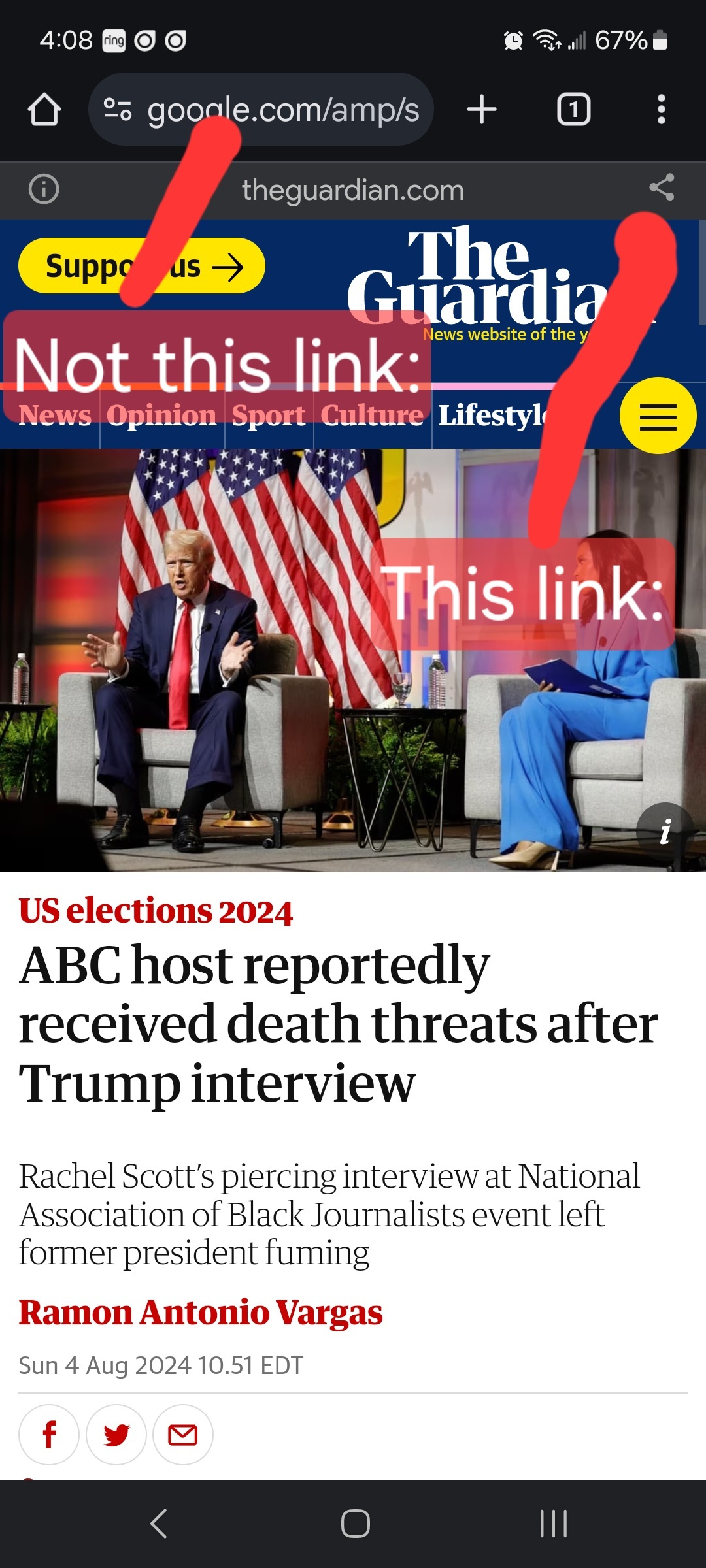
- Articles must be relevant to politics. Links must be to quality and original content. Articles should be worth reading. Clickbait, stub articles, and rehosted or stolen content are not allowed. Check your source for Reliability and Bias here.
- Be civil, No violations of TOS. It’s OK to say the subject of an article is behaving like a (pejorative, pejorative). It’s NOT OK to say another USER is (pejorative). Strong language is fine, just not directed at other members. Engage in good-faith and with respect! This includes accusing another user of being a bot or paid actor. Trolling is uncivil and is grounds for removal and/or a community ban.
- No memes, trolling, or low-effort comments. Reposts, misinformation, off-topic, trolling, or offensive. Similarly, if you see posts along these lines, do not engage. Report them, block them, and live a happier life than they do. We see too many slapfights that boil down to "Mom! He's bugging me!" and "I'm not touching you!" Going forward, slapfights will result in removed comments and temp bans to cool off.
- Vote based on comment quality, not agreement. This community aims to foster discussion; please reward people for putting effort into articulating their viewpoint, even if you disagree with it.
- No hate speech, slurs, celebrating death, advocating violence, or abusive language. This will result in a ban. Usernames containing racist, or inappropriate slurs will be banned without warning
We ask that the users report any comment or post that violate the rules, to use critical thinking when reading, posting or commenting. Users that post off-topic spam, advocate violence, have multiple comments or posts removed, weaponize reports or violate the code of conduct will be banned.
All posts and comments will be reviewed on a case-by-case basis. This means that some content that violates the rules may be allowed, while other content that does not violate the rules may be removed. The moderators retain the right to remove any content and ban users.
That's all the rules!
Civic Links
• Congressional Awards Program
• Library of Congress Legislative Resources
• U.S. House of Representatives
Partnered Communities:
• News
view the rest of the comments
I’m a little confused about what’s confusing you. Unless you are just unfamiliar with the idea that the United States federal government was intended to be an experimental hybrid between national and federal interests. The original fear being that a purely federal system would give too much power to too few and allow the creation of a single party state. Not that that seems to be happening right now or anything…
You seem to be mostly pointing out the same thing that I was trying to point out except my point was more if we uncapped the house it would take some of that undo power away from the smaller states and states in general. Also fulfilling the obligation from over 100 years ago to give Indian nations voting members of Congress would also expand the electoral college.
My overall point was simply saying killing the electoral college wouldn’t do anything to remove federal power or create a more democratic nation. Because of the reasons you outlined, we need to do more, either to reinforce the hybridization or do away with the federalization altogether if the goal is direct democracy.
The antecedents of the American legal system are nations and empires with a complex web of local and sovereign interests, going back at least to the Magna Carta and the immediate pre-indepndence relationship of the colonies with the British Parliament.
When the current US Constitution was written I suspect the more pressing interests were "not being abused by Europe" and "avoiding wars between the states over currency or slaves" rather than any high-minded experiment with federal democracy.
Anyway....
You're making a correlation I just don't see. Either direct election of the executive or dramatically increasing the membership in the house would make definitely make the federal government more equitably responsive to larger states. But I don't see how this at all this would affects the balance of power between the state and federal governments.
The vertical separation of power between the federal government and the fifty sovereign states is not directly affected by how the federal government is chosen. One nationwide election, fifty statewide elections (plus DC), or just a vote by the governors or congress or teh various state legislators would all result in the same enumerated and interpreted power.
While you are not totally wrong, we are talking about a time that was the beginning of transcendentalism. High minded ideals were very much at the forefront of what was going on. Even if it was being limited to white land owners.
I’m not talking about a separation of power between the states and the federal government. I’m talking about the difference between the states and the people. There isn’t supposed to be a separation of power between the state and federal government, just things that are one’s responsibility and things that are the other. The federal government was created by the states for the states. They specified what they wanted to Federalize and what they didn’t. I think at this point the question becomes a lot more does the framework created by white land owners in the original 13 states have any bearing on modern reality in 50 states plus dozens of Indian nations plus several territories plus DC.
Also:
Can you elaborate on what you mean by this, specifically?
I've heard the same assertion you make elsewhere, that there was a treaty by either the pre-constitution federal congress or the modern constitution-and-president government that promised some form of representation in congress. But I can't find any actual citation of when this treaty was actually made.
I'm fairly certain that it wasn't only 100 years ago, since that would be 1926 and that's about the time Congress passed the Indian Citizenship Act of 1924 which granted non-assimilated native Americans formal citizenship. Doing so included them (along with blacks, gays, jews, and other minorities) under the the aegis of general democracy. It would be very weird for Congress to promise a group of newly-declared citizens additional representation when they just did that.
https://en.wikipedia.org/wiki/Indian_Citizenship_Act
Maybe instead you're alluding to the 1778 treaty of fort pitt, which by all accounts did include an overt offer of recognizing a native state? (Although, if wikipedia's text is accurate, that treaty would have been fatally invalidated when the Lenape joined the revolutionary war on the side of the British).
https://en.wikipedia.org/wiki/Treaty_of_Fort_Pitt
This is an interesting question with a bit of a complicated answer filled with back-stabbing and duplicity. You are right, it’s not totally correct to simply say it was 100 years ago;
This is one of those things that was never applied to all Indian nations, because it was done individually through each Indian nation. Usually through the removal process. For instance, in my tribe, the Cherokee Nation, the Treaty of New Echota was signed in 1835 and the language regarding whether it meant a voting or non-voting member is still up for debate. Nearly 200 years later this is still an ongoing issue.
The reason people usually say 100 years is because the Indian Wars ended in the 1920s and that’s when the last removal and reservation agreements were signed.