politics
Welcome to the discussion of US Politics!
Rules:
- Post only links to articles, Title must fairly describe link contents. If your title differs from the site’s, it should only be to add context or be more descriptive. Do not post entire articles in the body or in the comments.
Links must be to the original source, not an aggregator like Google Amp, MSN, or Yahoo.
Example:
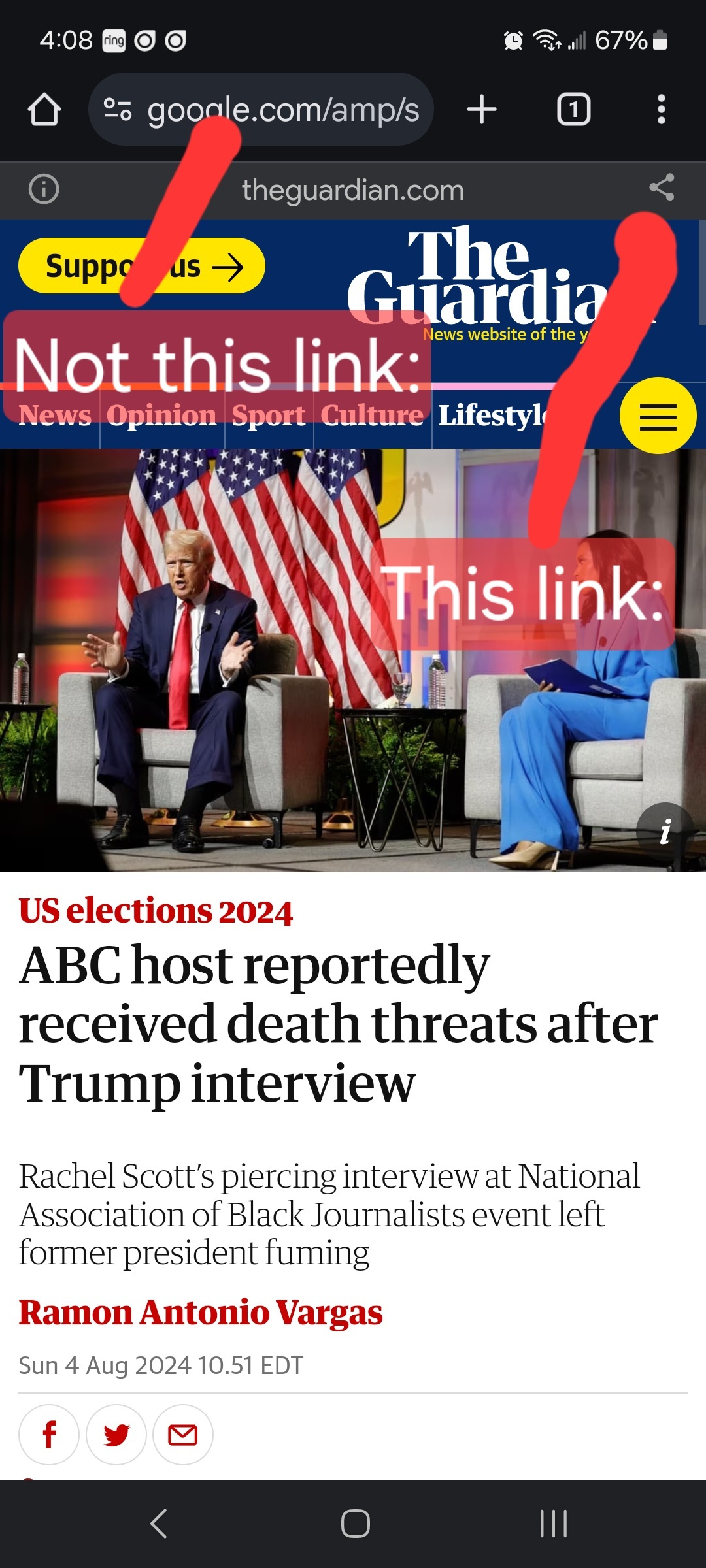
- Articles must be relevant to politics. Links must be to quality and original content. Articles should be worth reading. Clickbait, stub articles, and rehosted or stolen content are not allowed. Check your source for Reliability and Bias here.
- Be civil, No violations of TOS. It’s OK to say the subject of an article is behaving like a (pejorative, pejorative). It’s NOT OK to say another USER is (pejorative). Strong language is fine, just not directed at other members. Engage in good-faith and with respect! This includes accusing another user of being a bot or paid actor. Trolling is uncivil and is grounds for removal and/or a community ban.
- No memes, trolling, or low-effort comments. Reposts, misinformation, off-topic, trolling, or offensive. Similarly, if you see posts along these lines, do not engage. Report them, block them, and live a happier life than they do. We see too many slapfights that boil down to "Mom! He's bugging me!" and "I'm not touching you!" Going forward, slapfights will result in removed comments and temp bans to cool off.
- Vote based on comment quality, not agreement. This community aims to foster discussion; please reward people for putting effort into articulating their viewpoint, even if you disagree with it.
- No hate speech, slurs, celebrating death, advocating violence, or abusive language. This will result in a ban. Usernames containing racist, or inappropriate slurs will be banned without warning
We ask that the users report any comment or post that violate the rules, to use critical thinking when reading, posting or commenting. Users that post off-topic spam, advocate violence, have multiple comments or posts removed, weaponize reports or violate the code of conduct will be banned.
All posts and comments will be reviewed on a case-by-case basis. This means that some content that violates the rules may be allowed, while other content that does not violate the rules may be removed. The moderators retain the right to remove any content and ban users.
That's all the rules!
Civic Links
• Congressional Awards Program
• Library of Congress Legislative Resources
• U.S. House of Representatives
Partnered Communities:
• News
view the rest of the comments
I applaud the high quality references, but the wealth taxes studied by Econ are often not the wealth taxes that are in popular discourse.
In particular, the general public, and the few inequality economists like Piketty, Saez, and Zucman, advocate for a billionaires wealth tax. Due to the lack of any sort of data on this, the broader economics profession generally only studies the effects of wealth taxes in the top bracket, which targets the wealthy, but not the ultra wealthy.
The NBER paper you cited is particularly egregious. The claim that a one percentage point increase in the top wealth tax rate leads to capital flight is arguably misleading because Sweden and Denmark have infamously flat taxes (contrary to popular belief). Their top wealth tax applied to singles/couples with a wealth exceeding 1500K/3000K, or about 150K/300K USD.
That is... not very wealthy, and if anything only middle/upper middle class. Not at all what a billionaires tax would target.
The broader evidence is that Sweden has exhibited a serious backsliding in its inequality measures, and the collapse of its welfare state after abolishing wealth taxes.
‘We got lazy and complacent’: Swedish pensioners explain how abolishing the wealth tax changed their country - https://theconversation.com/we-got-lazy-and-complacent-swedish-pensioners-explain-how-abolishing-the-wealth-tax-changed-their-country-272041
All true, but why would one think the wealthy would not act the same as the ultra-wealthy? The rich might want to keep their wealth because they think they will use it for something such as starting a business. Mamdani is causing billionaires to leave NYC. From https://nypost.com/2026/05/06/us-news/billionaire-ken-griffin-scales-back-nyc-jobs-in-response-to-mamdanis-tax-the-rich-antics-sparking-fears-wealthy-exodus-has-begun/
Billionaire bigwigs Ken Griffin and Marc Rowan are taking thousands of jobs out of the Big Apple and setting their sights elsewhere as a “direct consequence” of Mayor Mamdani’s “tax the rich” antics — stoking fears that a big-money exodus is underway.
Because wealth rapidly becomes illiquid as it increases in value. The capital of the ultra wealthy is intimately tied to physical assets in the real world that makes it difficult for capital flight to occur. They are wealthy because they own the supermarkets, the hospitals, and physical infrastructure.
An example of this is when the UK froze/seized Russian billionaire Abramovich's assets as part of sanctions, which included the Chelsea Football club. Abramovich (and the media) made a big stink about it, but was ultimately forced to sell.
The case for keeping the ultra wealthy around for their entrepeneurial innovation is inconsistent with broader economic evidence. Bell et al 2019 (QJE) show that although it is true that the young of the top 1% (again, not the ultra wealthy) are 10x more likely to become inventors, the actual causal mechanism is exposure effects, i.e. having strong peer networks.
This is something that is explicitly worsened by abolishing wealth taxes, which are well documented to increase wealth concentration and social mobility.
Who Becomes an Inventor in America? The Importance of Exposure to Innovation* | The Quarterly Journal of Economics | Oxford Academic - https://academic.oup.com/qje/article-abstract/134/2/647/5218522
I suggest you read Zucman's common wealth tax objections, which addresses most common rebuttals.
https://gabriel-zucman.eu/files/saez-zucman-wealthtaxobjections.pdf
If capital flight is difficult why are billionaires leaving NYC. From https://nypost.com/2026/05/08/us-news/ny-leaders-desperately-try-to-stop-billionaire-bigs-from-fleeing-city-over-mamdani/
New York leaders are desperately trying to stop billionaire bigwigs from hightailing it out of the Big Apple with their cash, businesses and thousands of jobs — as fears mount that Mayor Zohran Mamdani’s policies will accelerate the Empire State’s nation-leading loss of wealth.
The splashy one-two punch of Citadel CEO Ken Griffin and Apollo Global Management honcho Marc Rowan pledging to expand outside New York City has been coupled with a silent wave of businesses “quiet quitting” the city over its hostile environment, insiders told The Post.
The desire to be rich encourages people to work hard and innovate. The reason the wealthy want to keep their wealth could be that they desire to use it for something such as starting a business. Elon Musk has several businesses.
The New York Post is a Murdoch propaganda tabloid. If that's the best source you've got, you shouldn't even bother.