this post was submitted on 12 Oct 2026
413 points (97.0% liked)
politics
31379 readers
2472 users here now
Welcome to the discussion of US Politics!
Rules:
- Post only links to articles. Title must fairly describe link contents. If your title differs from the site’s, it should only be to add context or be more descriptive. Do not post entire articles in the body or in the comments.
Links must be to the original source, not an aggregator like Google Amp, MSN, or Yahoo.
Example:
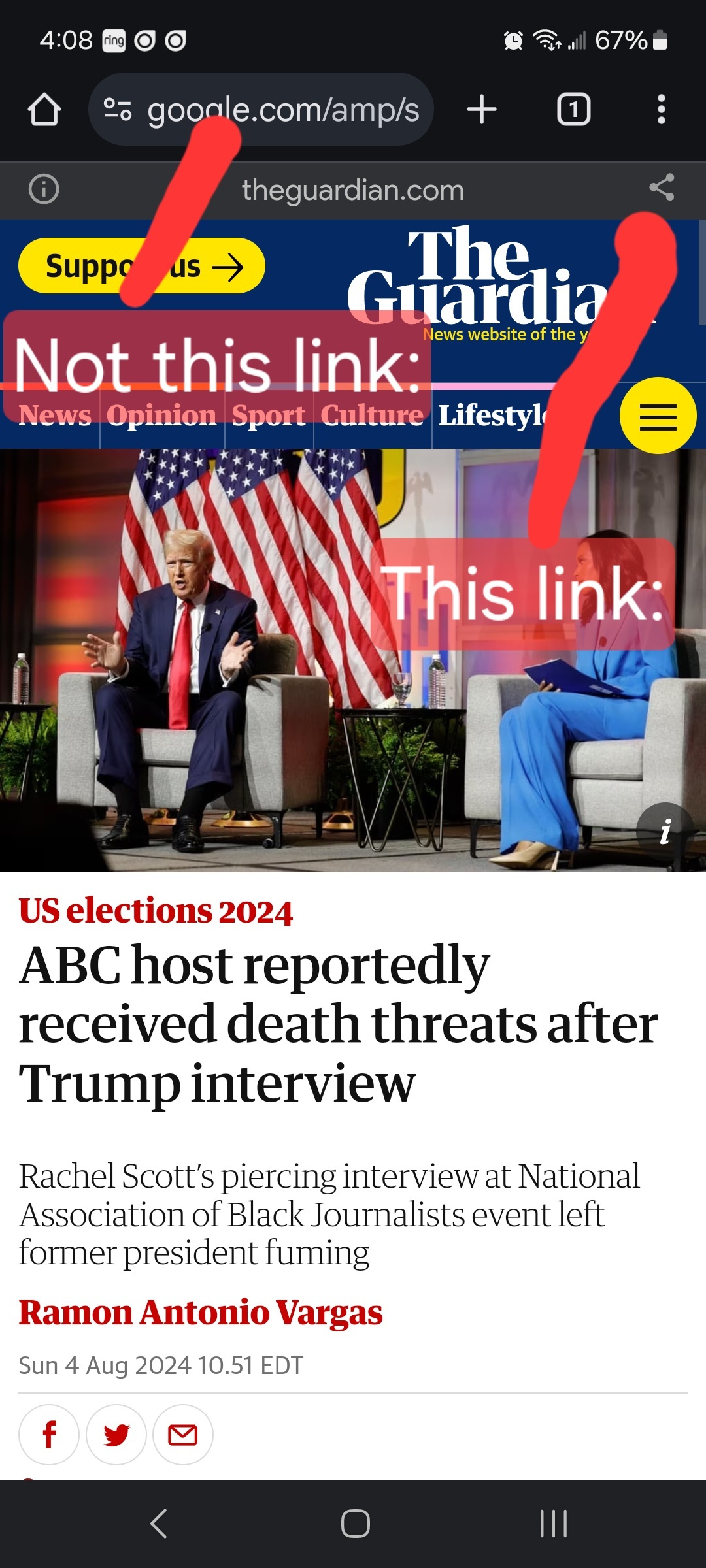
- Articles must be relevant to US politics and contain quality and original content. Social Media adjacent hosts like Substack are allowed, but ONLY if they tie back to a company/subsidiary. No personal or friend group blogs and no self-promotion. Articles should be worth reading. Clickbait, stub articles, and re-hosted or stolen content are not allowed. Check your source for Reliability and Bias here.
- Be civil, No violations of TOS.
It’s OK to say the subject of an article is behaving like a (pejorative, pejorative). It’s NOT OK to say another USER is (pejorative). Strong language is fine, just not directed at other members. Engage in good-faith and with respect! This includes accusing other users of being bots or paid actors.
- No memes, trolling, misinformation, or low-effort posts/comments (including reposts). If you see posts like this that anger you, do not engage. Report, block, and live a happier life than they do. Any slap-fight is subject to comment removals. Fights full of rule violations will result in temporary bans to cool off.
- No manipulating votes via bots or alt accounts; this will result in permanent bans. Vote based on comment quality, not agreement. This community aims to foster discussion; please reward people for putting effort into articulating their viewpoint, even if you disagree with it.
- No hate speech, slurs, celebrating death, advocating violence, or abusive language. This will result in an account ban. Usernames containing racist, or inappropriate slurs will be permanently banned.
We ask that the users report any comment or post that violate the rules and use critical thinking when reading, posting, and commenting. Users that repeatedly have comments or posts removed, weaponize reports, or violate the code of conduct, will be banned.
All posts and comments will be reviewed on a case-by-case basis. This means that some content that violates the rules may be allowed, while other content that does not violate the rules may be removed. The moderators retain the right to remove any content and ban users. The reason(s) behind moderator action(s) are publicly available through the Modlog.
That's all the rules!
Civic Links
• Register To Vote
• Citizenship Resource Center
• Congressional Awards Program
• Federal Government Agencies
• Library of Congress Legislative Resources
• The White House
• U.S. House of Representatives
• U.S. Senate
Partnered Communities:
• News
• World News
• Business News
• Political Discussion
• Ask Politics
• Military News
• Global Politics
• Moderate Politics
• Progressive Politics
• UK Politics
• Canadian Politics
• Australian Politics
• New Zealand Politics
founded 3 years ago
MODERATORS
Progressive policies aren’t popular in the states.
Liberal ones are.
I guess that must be why progressive candidates pushed out a bunch of liberal incumbents in the primaries.
Yeah in New York and California.
Can you give me the top 5 most popular liberal policies?
Progressive taxation. Affordable Universal Healthcare. Public Infrastructure and Education. Reproductive rights for women. Voting rights. Providing a social safety net. Climate change. Regulating industrial pollution. Firearms regulation. Need any more?
Affordable lol. Yeah a very popular word. Without that word Universal Healthcare just tanks with the people doesn't it? Gotta have it.
People love it when the things they need to live are... with in reach [pause for massive applause]
Or even maybe... realistically obtainable for most? [pause for wild deafening screams of adoration]
The differences are in implementation, not in goals.
Take affordable universal health care for instance. The progressive position is Medicare for All. The Liberal position is taxing and regulating health insurance companies to force them to cover everyone, and force everyone to buy health insurance.
And can you name some progressive policies That are being pushed but people aren't receptive to?
Depends on how you define "pushed" and "people". There aren't really enough progressive politicians to push any policies, and there are plenty of policies that have some support, but not widespread support. Granted, they're typically policies that would provide widespread benefit, but have been so twisted by propaganda that the people vote against their own interests.
"Free" healthcare and college are good examples, where people are unreceptive because they overestimate the cost and underestimate the cost of the present system.
Which doesn't mean those policies aren't popular. They've simply been propagandized to be "fairy tales". The opposition can't argue over the policy itself because the policy is popular so they have to argue around it. That's where you get these arguments that something is too expensive to implement or it's going to get exploited by "the wrong people" and such. But it doesn't make those policies unpopular. El-sayed is a great example because he runs on progressive policies and is very popular in his state. If the policies by nature were unpopular he wouldn't be a popular candidate. Nobody gave a shit that Mike Rogers kept saying El-Sayeds policies are too expensive because El-Sayed cuts through that bullshit to keep people focused on what the policy actually is.
And if we go back to those popular "liberal" policies at least half of them are also progressive policies and some of them I wouldn't even consider liberal, such as "Public Infrastructure and Education". Modern American liberalism is against state socialism and state controlled public use of anything is technically state socialism. Liberals have simply adopted parts of progressive policies because they're so popular not adopting them would be stupid.
Popularity isn't about anything other than the proportion of people in favor. If the majority of people believe the empty arguments around the policy, it will be unpopular.
The trickiest post of politics is dealing with the fact that people are mostly uninformed and uninterested, and grappling with the foolishness of the average citizen.
Which is why the popularity of a policy should be looked through the lens of do people actually support the idea behind the policy instead of what the policy is called. For example Medicare is viewed favorably among the republicans but when you turn around and start asking about government health coverage suddenly the support flips in the other way and republicans hate the idea. Except that's pretty much what medicare is.
You can't view popularity of a policy on a superficial level because on a superficial level the popularity swings whatever way depending on the very specific phrasing of the question. You have to get to the core of policy and then view the popularity of the core idea to understand the popularity of a policy. Because if the policy at its core is popular you can find support for it by cutting through the bullshit, but if the policy is unpopular no amount of cutting through the bullshit will get you support. You have to actually spin bullshit to make an unpopular policy popular and you can only do that when there's nobody on the other side calling it out. Going back to the El-Sayed and Rogers example, the reason their debate was so one-sided is because El-Sayed was on the side of popular policies and could easily present them as they are. And Rogers couldn't do anything because every time he tried to bullshit something he got called out.