this post was submitted on 20 Nov 2026
282 points (99.6% liked)

politics

31969 readers
2435 users here now

Welcome to the discussion of US Politics!

Rules:

  1. Post only links to articles. Title must fairly describe link contents. If your title differs from the site’s, it should only be to add context or be more descriptive. Do not post entire articles in the body or in the comments.

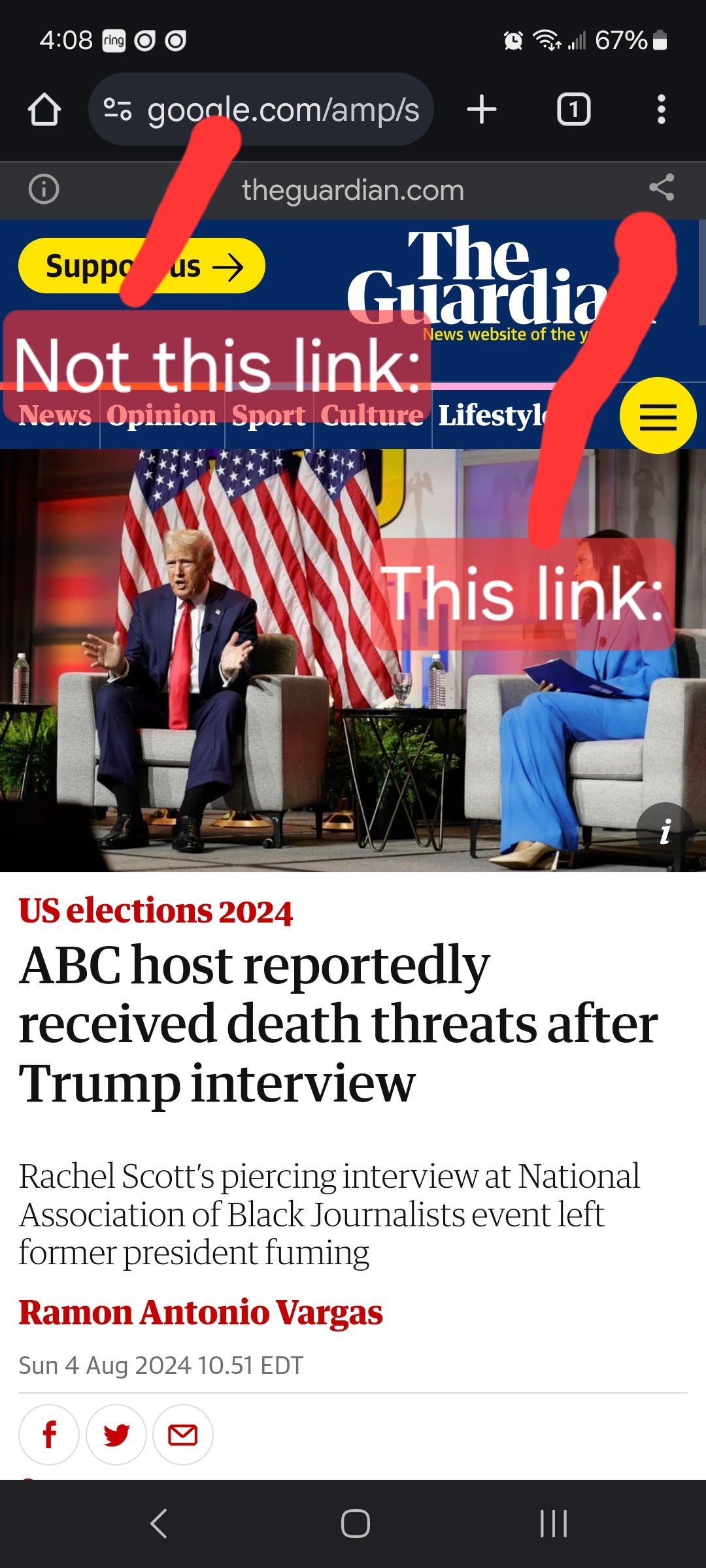
Links must be to the original source, not an aggregator like Google Amp, MSN, or Yahoo.

Example:
  1. Articles must be relevant to US politics and contain quality and original content. Social Media adjacent hosts like Substack are allowed, but ONLY if they tie back to a company/subsidiary. No personal or friend group blogs and no self-promotion. Articles should be worth reading. Clickbait, stub articles, and re-hosted or stolen content are not allowed. Check your source for Reliability and Bias here.
  2. Be civil, No violations of TOS. It’s OK to say the subject of an article is behaving like a (pejorative, pejorative). It’s NOT OK to say another USER is (pejorative). Strong language is fine, just not directed at other members. Engage in good-faith and with respect! This includes accusing other users of being bots or paid actors.
  3. No memes, trolling, misinformation, or low-effort posts/comments (including reposts). If you see posts like this that anger you, do not engage. Report, block, and live a happier life than they do. Any slap-fight is subject to comment removals. Fights full of rule violations will result in temporary bans to cool off.
  4. No manipulating votes via bots or alt accounts; this will result in permanent bans. Vote based on comment quality, not agreement. This community aims to foster discussion; please reward people for putting effort into articulating their viewpoint, even if you disagree with it.
  5. No hate speech, slurs, celebrating death, advocating violence, or abusive language. This will result in an account ban. Usernames containing racist, or inappropriate slurs will be permanently banned.

We ask that the users report any comment or post that violate the rules and use critical thinking when reading, posting, and commenting. Users that repeatedly have comments or posts removed, weaponize reports, or violate the code of conduct, will be banned.

All posts and comments will be reviewed on a case-by-case basis. This means that some content that violates the rules may be allowed, while other content that does not violate the rules may be removed. The moderators retain the right to remove any content and ban users. The reason(s) behind moderator action(s) are publicly available through the Modlog.

That's all the rules!

Civic Links

• Register To Vote

• Citizenship Resource Center

• Congressional Awards Program

• Federal Government Agencies

• Library of Congress Legislative Resources

• The White House

• U.S. House of Representatives

• U.S. Senate

Partnered Communities:

• News

• World News

• Business News

• Political Discussion

• Ask Politics

• Military News

• Global Politics

• Moderate Politics

• Progressive Politics

• UK Politics

• Canadian Politics

• Australian Politics

• New Zealand Politics

founded 3 years ago
MODERATORS
 

A federal judge ruled that messages sent by Brooke Rollins to USDA workers suggest Christianity is a shared faith and violate the first amendment

Religious messages that US agriculture secretary Brooke Rollins emailed to the agency’s 100,000 employees were unconstitutional, and she must be careful to avoid proselytizing when communicating with workers, a federal judge ruled Thursday.

Rollins sent the messages, which included Christian messages and images, from her official email account on holidays such as Independence Day, Thanksgiving, Christmas and Easter. She did not send messages commemorating holidays from other religions.

“And so, like the very first disciples to encounter our risen Lord in the Upper Room almost two thousand years ago, this Easter let us too be alive with hope, full of Paschal joy, and confident in the mission each of us has been called for,” Rollins wrote in a 5 April email, marking Easter.

US district judge Trina Thompson in San Francisco said the emails violated the first amendment’s establishment clause, pointing to her position of authority, her use of an official email account and the messages suggesting that Christianity is the shared faith of Department of Agriculture (USDA) workers.

you are viewing a single comment's thread
view the rest of the comments
[–] Sunflier@lemmy.world 36 points 1 day ago* (last edited 1 day ago) (5 children)

The problem I see is that she (any others) have no real reason to stop.

She has been ordered by a federal court to cease putting the religious stuff in her emails. If she defies the court's order to cease, the court will hold her in contempt. Contemp of court carries weight that can range from escalating personal fines every time she does it to jail. Jail as a result of contempt is not something a president can pardon since there was no conviction for a violation of a statute. It is merely a means to force compliance with the court’s order.

[–] kent_eh@lemmy.ca 4 points 16 hours ago

Will any of that happen before she retires?

[–] booly@sh.itjust.works 4 points 16 hours ago

One sanction a court can order is to pay the other side's legal fees, too, so that it becomes a substantial way to fund the nonprofits who fight for this kind of stuff.

[–] xtr0n@sh.itjust.works 12 points 1 day ago (2 children)

Would it be civil or criminal contempt? Apparently it matters

Yes, the President can pardon criminal contempt, but cannot pardon civil contempt.

https://legalknowledgebase.com/can-a-president-pardon-contempt

I remember being really distressed when this pardon happend aince it seems like it basically makea Trump’s friends immune from any court actions. :(

On August 25, 2017, President Donald Trumppardoned Joe Arpaio for criminal contempt of court, a misdemeanor

https://en.wikipedia.org/wiki/Pardon_of_Joe_Arpaio

[–] mkwt@lemmy.world 3 points 14 hours ago

There are 3 kinds of contempt, and a lot of confusion about them.

  1. Civil contempt. Sanctions imposed directly by judge on finding preponderance of evidence. Sanctions can only be used as stick to achieve compliance. Sanctions must stop when compliance is achieved. ("The defendant holds the keys to her cell").
  2. Criminal contempt is like a normal criminal case (at least I'm the federal courts). Original judge refers a case, then US attorneys prosecute it. All of the normal criminal process applies, including arraignment, pleas, and trial by jury. Criminal contempt cases are tried by a different judge than the original referring judge. There benefit of all the extra process is that it can impose punishment sanctions to punish past contempt that is no longer ongoing.
  3. a facie curiae, which means in the face of the court. This allows a judge to directly impose punishment sanctions, like fixed jail terms, for blatant disrespect or disobedience in the courtroom. Unlike #2, this can be imposed directly by the original judge in a summary process. No pleas or trial by jury. That is a huge amount of power. So to balance it out, it is limited geographically to the courtroom itself, and it is limited in time to when the court is in session and the judge is on the bench.

I think a lot of people have maybe seen #3 on some court TV highlight reels, and they get confused why this power is not being applied to this administration.

And the answer is that #2 applies instead, because they are smart enough to keep the contempt out of the courtroom. (And of course #2 doesn't happen because they control the prosecutors).

And the agency heads will dilly-dally right up until the #1 sanctions start to really bite, then they will come into compliance at the last minute. That's why you get a lot of headlines where it's like they finally complied, and there's no consequences for the delay. Because #1 doesn't have the power to impose those consequences. It's #2.

[–] Sunflier@lemmy.world 5 points 1 day ago* (last edited 1 day ago) (1 children)

It'd be civil since the claim arises under a civil claim to stop putting religious stuff in a governmental email. A criminal contempt thing would be like violating a restraining order to stop stalking. Basically, a criminal contempt is to punish bad conduct (like bad behavior at trial) while civil contempt is to restrain a person from doing something.

[–] booly@sh.itjust.works 4 points 16 hours ago

It’d be civil since the claim arises under a civil claim

That's not how it works. Criminal contempt can arise out of any refusal to follow a court order, including those related to civil cases.

But criminal contempt must generally be prosecuted by the executive branch, which is controlled by Trump, who doesn't hesitate to use that power to keep a two-track criminal justice system. All the court can do is refer something for prosecution, to the actual prosecutors. It's similar to how things like perjury or certain types of fraudulent use of judicial process get prosecuted: judicial referral, and an independent decision by the executive branch on whether to prosecute.

[–] ReptilianCleric@lemmy.today 1 points 1 day ago (1 children)

No, contempt is a charge by itself, making it something that can be pardoned depending on the jurisdiction, not the weight of the charge.

[–] Sunflier@lemmy.world 2 points 1 day ago* (last edited 1 day ago)

contempt is a charge by itself

Can be, but I elaborated further on the distinction here.